Sudden Pressure Loss Repair
We trace sudden whole-house pressure drops for homeowners and property managers, checking supply lines and accessible plumbing; diagnostic cost is typically $75–$200, depending on testing and travel.
A booster pump that hums while the shower loses force may have a worn component or a flow problem. Arizona Plumbing Pros repairs residential booster pumps across Arizona, checking the pump and its operating conditions before recommending work.
Browse all service options available across Arizona and choose the right fit for your project.
We trace sudden whole-house pressure drops for homeowners and property managers, checking supply lines and accessible plumbing; diagnostic cost is typically $75–$200, depending on testing and travel.
We repair or replace residential pressure regulators, with cost shaped by valve size and access. Typical replacement runs $250–$600.
Install a residential booster pump sized for household flow; typical Arizona jobs run $800–$2,500, depending on pump capacity and wiring. We serve homes near Downtown Glendale and beyond.
We trace weak hot-water flow in Arizona homes, checking heater connections and nearby piping; typical repairs run $150–$600, depending on access and parts.
We restore weak faucet flow for Arizona homeowners, checking the aerator and fixture supply; repair scope and access shape the cost.
We trace and repair pressure-related water leaks in homes, including concealed pipe leaks; access and wall repair needs shape the job scope and cost.
We repair or replace residential well pressure tanks, matching tank size and plumbing connections; replacement typically runs $500–$1,500 depending on tank size and access.
We clear residential and commercial pipe blockages, including debris in accessible drain lines; job pricing depends on blockage depth, pipe access, and the repair needed.
We clear or replace clogged home water filters; service scope and cartridge access affect the job. Prescott Courthouse Plaza is a local reference, while elevation-related rainfall and Flagstaff’s colder winters can sh...
We repair residential softener flow restrictions, checking valve and bypass access; typical repairs run $150–$500, depending on parts and access.
Well water pressure repair for homeowners includes testing the well system and its pressure tank; tank size and plumbing access affect replacement scope, with tank work typically $500–$1,500.
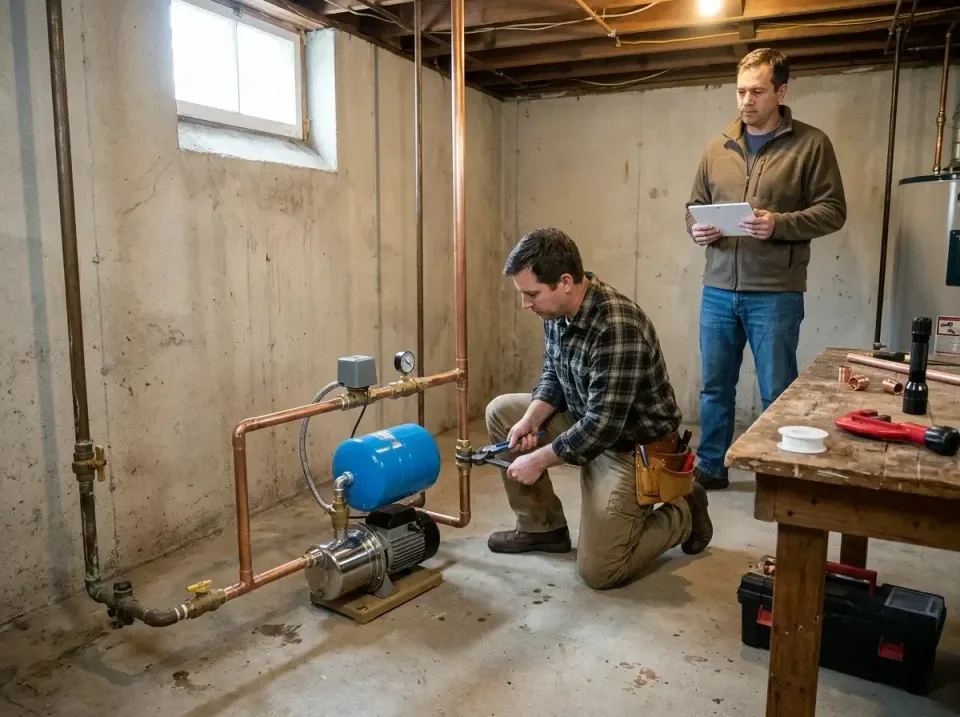
A booster pump that runs but cannot maintain flow needs a measured diagnosis, not a higher pressure setting. Our crew checks static and dynamic pressure and compares the pump’s operation with the home’s water demand before setting a repair scope.
Arizona heat puts outdoor pump equipment under added strain; exposed units need periodic visual checks for damage and secure electrical enclosures. Low desert humidity also increases evaporation and water demand, so a pump may work harder during periods of heavy household use. Mineral deposits from hard water can narrow passages or interfere with moving parts, restricting flow even when the motor starts.
We explain what the readings show and confirm the proposed work before proceeding. Call (877) 773-0781 to discuss a scope review.
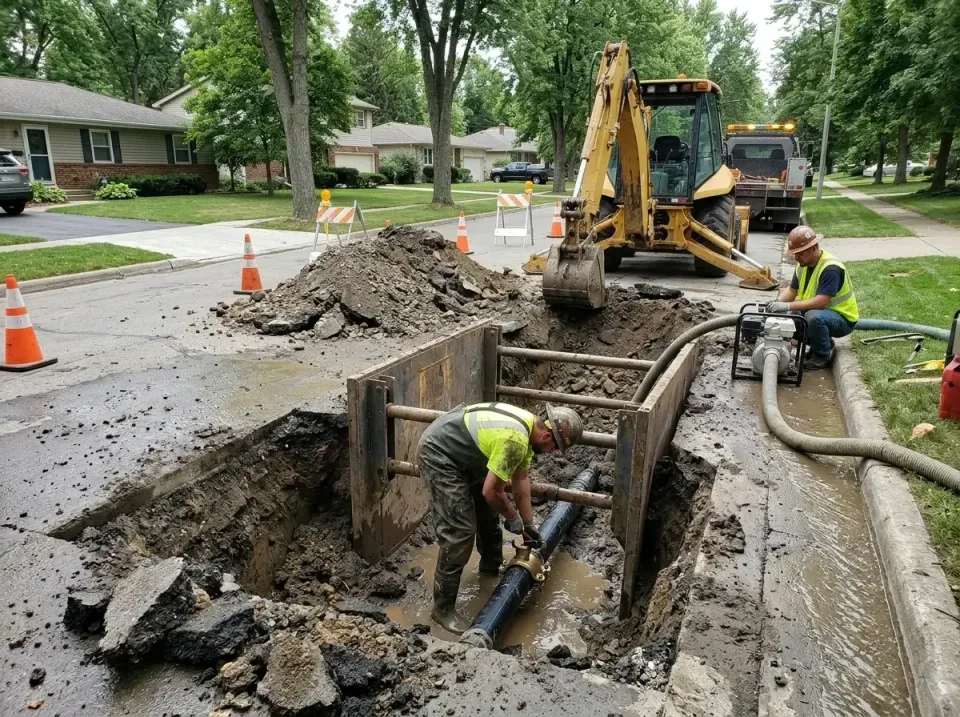
We begin by documenting the pump’s make and visible condition, then take pressure readings at a hose-bib connection. The first visit establishes the symptom and the operating conditions; repair timing depends on access, diagnosis, and parts availability.
Next, we compare readings with the pump’s expected flow and pressure rise, inspect accessible controls and connections, and explain the repair scope before work begins. Customers near Arizona State University, Tempe, can share a clear photo of the pump label and surrounding space to help us understand access before arrival.
Arizona has no coastal climate, so pump exposure and protection should be assessed for the actual inland property rather than assumptions based on coastal conditions. Cold snaps can freeze outdoor pipes and hose bibs, so tell us if the pump or its plumbing is exposed.
Monsoon humidity and storms can reveal roof or drainage leaks near equipment; mention any water intrusion you have noticed. We finish by checking operation and reviewing the completed work.
A pump that cycles or struggles to serve a home near Downtown Glendale, Arizona, may be mismatched to demand or operating with a damaged component. Guessing at adjustments can make performance less predictable.
We measure the system before changing settings. Booster pumps require flow-rate and pressure-rise sizing, and the pump curve helps show whether a unit can meet the needed conditions.
A rushed swap can overlook electrical connections; pump wiring must meet National Electrical Code requirements, and servicing calls for safe isolation procedures. We follow applicable OSHA lockout/tagout practices while working on pump equipment.
Monsoon season typically runs June through September, and its storms can bring sudden downpours and flash flooding; that makes it sensible to keep exposed equipment and access areas clear before weather arrives. Pima Air and Space Museum is a useful Tucson reference point, but conditions at each property not distance to a landmark determine access and scope. Our company background explains how we approach measured repairs.
A pump that loses pressure may need a small control repair or work involving the pump, wiring, and plumbing connections. The scope matters.
For reference, pressure diagnosis commonly runs $75–$200, reflecting testing and travel. A booster pump installation may run $800–$2,500, with pump capacity and wiring affecting the amount; that is an installation benchmark, not a repair quote.
A separate pressure regulator replacement may cost $250–$600 depending on valve size and access, but it is not automatically part of pump repair. Final quotes vary with repair scope, equipment, access, and site conditions.
A home near the Arizona State Capitol, Phoenix, has no special pricing simply because of its location; pump placement, parts, and electrical access are the practical drivers. Phoenix summer highs often exceed 100°F, so outdoor equipment condition may affect what needs attention. Contact Arizona Plumbing Pros at (877) 773-0781 for a quote matched to the repair scope.
Hot Water Pressure Difference
Before: Hot water pressure is lower than cold at a fixture, leaving the cause unclear. The difference may be limited to one fixture or involve more of the plumbing system, so comparing several fixtures helps narrow down where attention is needed.
After: A technician checks pressure at fixtures and across the system, then compares multiple fixtures to help isolate a localized restriction. You receive an explanation of the findings and repair options before work begins, without assuming the pump is the cause.
Ask whether the pump, tank, electrical compartment, or nearby plumbing must be accessible. Clearing the right area ahead of the visit can help the technician inspect the system safely and avoid surprises about access once work is being considered.
Ask for the proposed work and its terms in writing before authorizing it. Reviewing the details helps you understand what has been agreed, which repair options are included, and whether any added work would need your approval.
For a booster pump review near Petrified Forest National Park, Tucson Downtown, Glen Canyon Dam, Old Town Scottsdale, Sabino Canyon Recreation Area, or Chandler Downtown Historic District, call Arizona Plumbing Pros at (877) 773-0781 to discuss the repair scope.
Yes, if testing shows the booster pump is failing to maintain flow at the fixtures; a pressure gauge at a hose-bib connection helps compare readings. Northern Arizona experiences snow and seasonal freeze-thaw, so exposed pump plumbing there may need attention for freeze-related damage as well.
Frequent cycling can point to a pump or control problem, but the cause should be verified before parts are changed. At properties near Northern Arizona University, Flagstaff, winter conditions make it useful to mention any exposed equipment or freeze-related changes during scheduling.
Share a photo of the pump label, its location, and nearby connections, and clear a safe path to the equipment. Rainfall varies widely by elevation and location, so note any water exposure around the pump rather than assuming conditions are the same statewide.
Yes, if the pump and its components are repairable and access allows safe work; the crew can assess those conditions before confirming scope. Winter nights can bring freezing temperatures in higher elevations, so tell us if exposed lines or the pump enclosure have experienced freezing.
No, shut it off if it is making a severe new noise, leaking, or showing an electrical hazard, and do not open its electrical cover. Near South Mountain Park and Preserve, Phoenix, as elsewhere, have the equipment inspected rather than assuming the surrounding climate explains the sound.
Select a city to find local low water pressure repair providers we cover in Arizona.